Contact us
HBIHungarian
Blueprint
Institute

“If we want to defend democracy,we’d better stop protecting it —and start
renewing it.

HBI is an independent think tank connected to and supporting the TISZA party
and a meaningful renewal of democracy in Hungary and around the world.

From democratic renewal to collective transformation

We do not export a modelWe reveal the patterns that make change possible.

We are feeling stuck and undergoing profound transformations at the same time. Past frameworks and institutions are struggling to explain and keep up with reality. We desperately need to renew our maps to navigate this new terrain.

The World Beyond — How to re-ignite exhausted democracies, PDF coverHOW TO RE-IGNITE EXHAUSTED DEMOCRACIESDownload PDF ↓

The challenge

The West is not only facing political pressure. It is facing a crisis of identity, belonging and institutional imagination.
The experience

Hungary’s democratic renewal created practical knowledge in movement-building, participation, governance transition, civic innovation and institutional renewal.

The contribution

HBI translates that experience into adaptable approaches and practical frameworks that help leaders build hope, participation, institutional capacity and lasting change.

Why this matters

A national experience can become an international contribution.

The challenges are global: declining trust, polarisation, weakened participation, institutional fatigue and the growing complexity of governing. Hungary can contribute practical knowledge—not ideology—to this defining conversation.

The Hungarian experience shows how renewed leadership, genuine citizen engagement, place-based dignity and collective agency can make the seemingly impossible possible.

01Unique insights from democratic renewal
02A living laboratory for shared learning
03A spark of hope and possibility
04A proof of concept for meaningful change
05Practical frameworks leaders can use
06A partner in turning insight into action

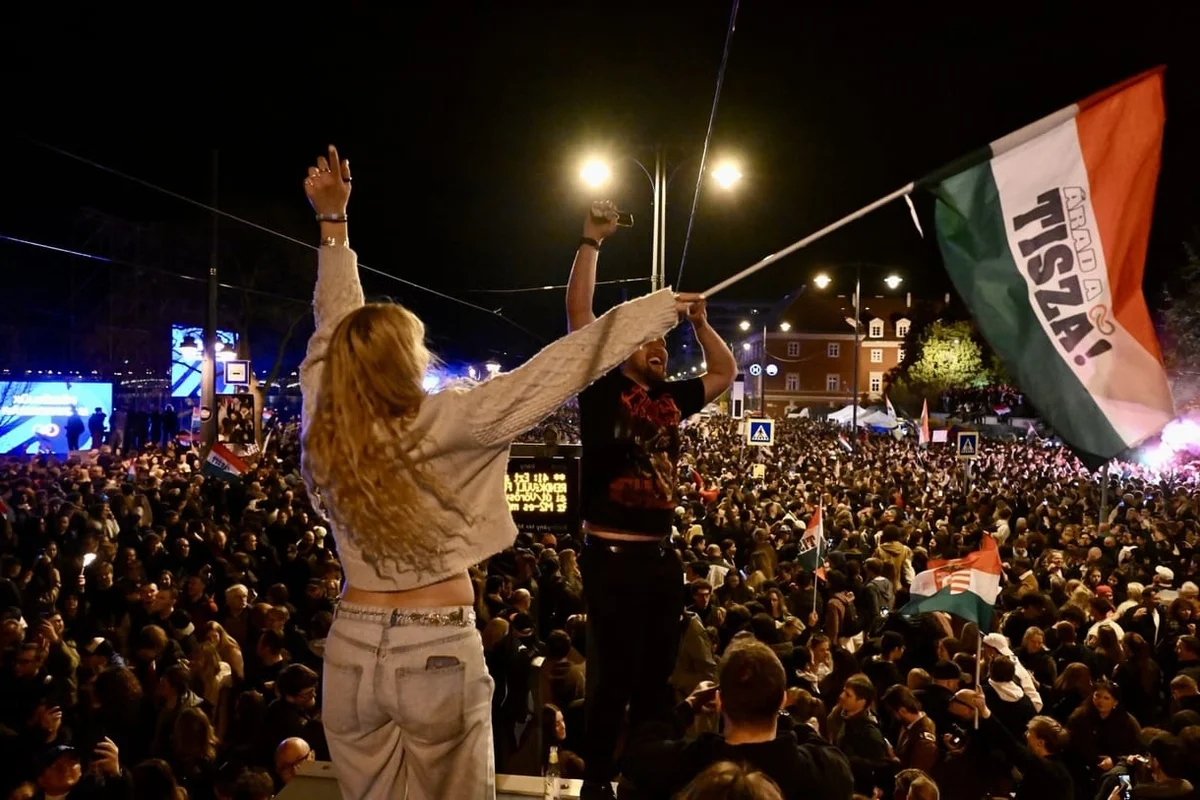
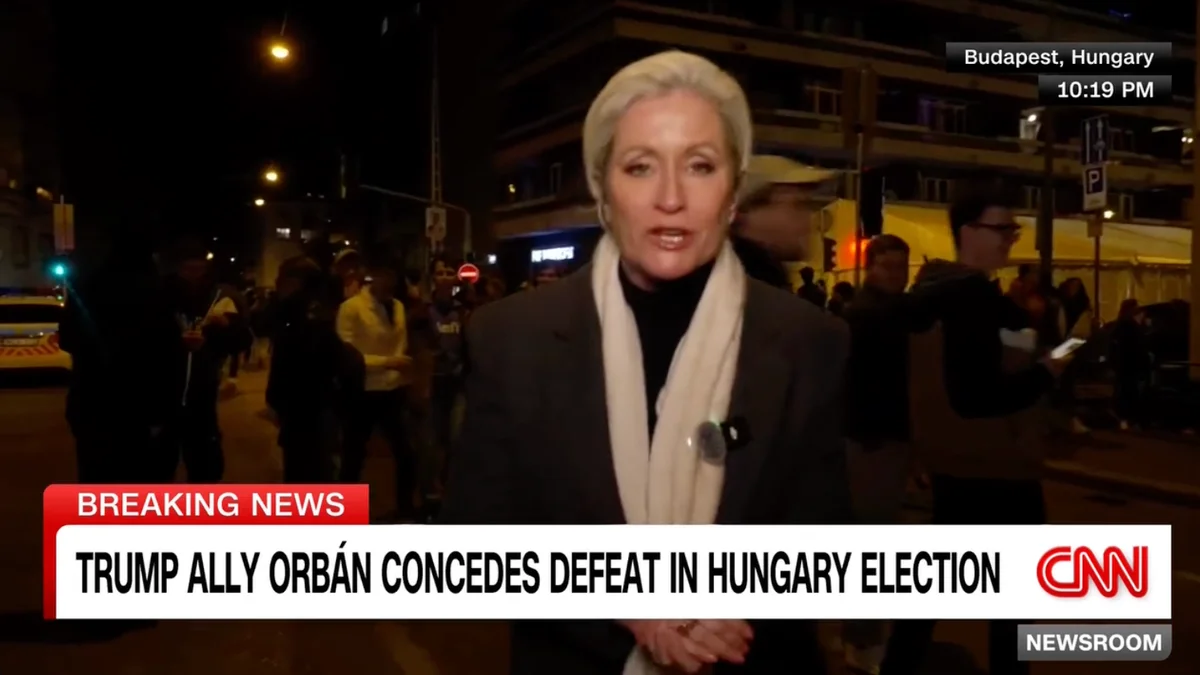
Hungary, 12 April 2026

A moment of
possibility

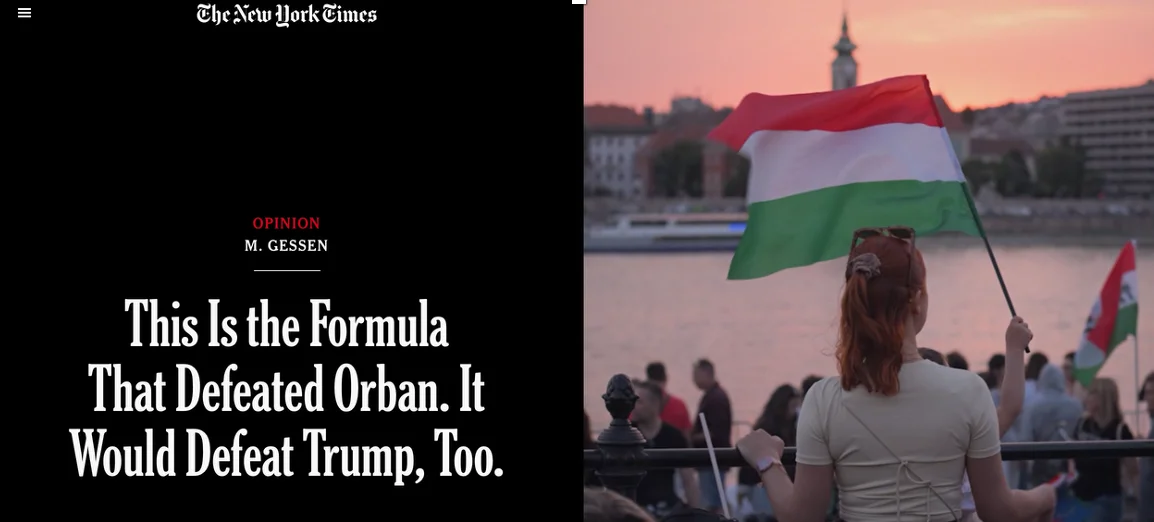
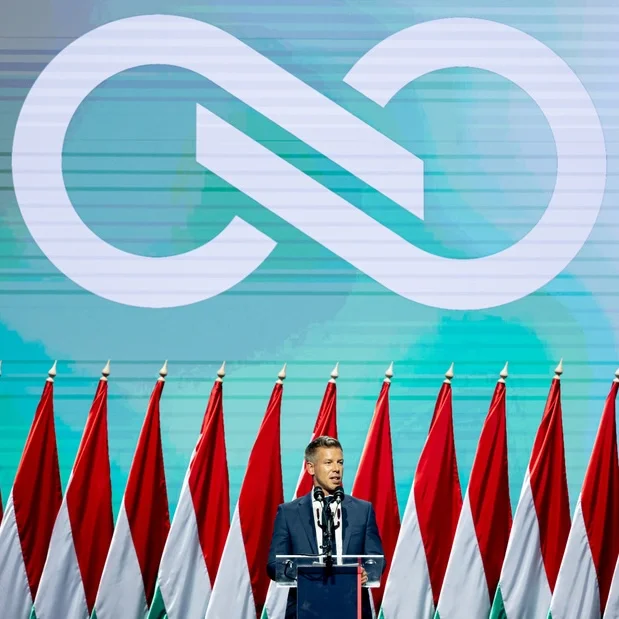
A glimpse of the energy, shared hope and international attention surrounding Hungary’s democratic renewal.
The HBI Framework

The Hungarian Blueprint:
10 strategic steps for genuine transformation

The Hungarian Blueprint is not a methodology. It is a way of understanding transformation.

The experiential reality of aStuck Present
The genuine promise of aCredible Future
The guided emergence ofCollective Agency

10 Strategic Steps

01

Build Hope

How do people begin believing that a different future is possible?

The Central QuestionHow do people begin believing that a different future is possible?
The Hungarian Experience
  • How did hope emerge within a society that had grown accustomed to political resignation? What enabled people to believe that meaningful change was possible again? What role did language, symbols, shared experiences and alternative realities play in rebuilding collective confidence?
  • It was part a willingness born out of desperation, part an emotional paradigm shift from “nothing can change” to “a better future is possible”, part communities being formed and collective agency being born, transforming desperation into hope.
  • Change became credible when people could see and experience an alternative, not simply hear promises about one or criticisms of the status quo.
The HBI Framework
  1. Hope is not optimism.
  2. Hope emerges when people believe that the present is not inevitable, and a better future is both possible and achievable through their own participation.
  3. It is the combination of possibility and agency, fueled by desperation or vulnerability, that transforms spectators into participants.
  4. New leadership, visible momentum, local communities and shared experiences need to be translated into symbolic actions, moments and new language to anchor hope into culture.
Practical Tools
  • Identifying and framing the dominant “stuck present”
  • Designing the momentum of credible alternative futures
  • Designing an actionable framework of opportunity and agency
  • Building agency instead of dependency through symbolic moments and shared experiences
Desperation /
Vulnerability
Opportunity
+
Agency
Mission
Action ChallengeDesign a credible alternative future capable of generating collective action, based on analysing the dominant “current reality” within your own organisation, community or country.
02

Listening is Not an Act,
It is a Relationship

How can listening shape who you are and increase your potential?

The Central QuestionHow can listening shape who you are and increase your potential?
The Hungarian Experience
  • Listening worked, because it went beyond asking people what they wanted. One of the deepest lessons from Hungary's democratic renewal is that listening is not simply a communication technique. It is the foundation of relationship.
  • Listening is not about giving people the opportunity to talk. It is about building and cultivating a relationship where people feel they are heard, they matter, and their contribution can shape the whole.
  • Listening takes many forms: conversation, observation, presence, attention, sensing, intuition, feeling, meeting, responding, connecting. What you choose and cultivate gives character and foundation to the relationship.
  • Listening requires honesty, engagement, and a willingness to work with what you hear, letting it shape you. When this happens consistently, participation becomes possible. Trust begins to grow. Collective agency emerges.
The HBI Frame

Listening is not an activity. It is the property of the relationship itself. What forms you choose to cultivate defines its character.

Listening is the foundation of every powerful collaborative relationship.

It cannot be reduced to consultation, surveys or feedback mechanisms. It must be intentionally cultivated, designed, developed and integrated as an ecosystem.

Listening is embedded in character, behaviour and infrastructure: it is a relationship that creates a knowledge system.

Listening inspires belief and faith, strengthens trust, nurtures loyalty and enables collective intelligence to emerge.

Good listening does three things simultaneously: people feel heard, relationships deepen, collective knowledge grows.

Listening feeds decisions, future conversations and an accumulating understanding of the community.

Practical Tools
  • Digital engagement systems
  • Face-to-face dialogue and community conversations
  • Participatory sensing and sense-making
  • Relationship-centred organisational design
  • Feedback and learning architectures
  • Citizen participation infrastructure
Action ChallengeDesign a listening ecosystem for your own organisation, community or institution: identify the relationships that matter, choose the forms of listening they require, and define how what you hear will shape decisions, behaviour and shared action.
03

Fresh Leadership is About Authenticity and Renewal

How can you become the symbol of the change people desire?

The Central QuestionHow can you become the symbol of the change people desire?
The Hungarian Experience
  • It is not about political ideologies. It is about the experience of a failing system in need of transformation.
  • Leadership is about strength to drive change, but also about vulnerability that requires support.
  • A leader we trust is not one who is faultless, but one who is genuine, not one who represents the system, but one who challenges it.
  • The answer lies in practical solutions and governance as a service.
The HBI Frame

Real is becoming more desirable than the illusion of perfect.

Genuine renewal is the only major underlying promise that works.

Find authenticity and own your faults. Embody and serve the mission of renewal.

Go beyond ideological and identity debates and establish a new sphere of service.

Social media requires genuine presence, not only communication exercises.

Practical Tools
  • Designing a credible renewal platform
  • Authentic leadership coaching
  • Social connection strategy and practices
  • A social media strategy built around genuine leadership presence and relationships
04

Create Stories that Shape Reality

How do stories become movements?

The Central QuestionHow do stories become movements?
The Hungarian Experience
  • How can stories evolve beyond political communication? How did meaning-making become more powerful than messaging? How did shared narratives shape collective identity?
  • The TISZA story became something that was lived, not only told, and people could both join in and translate it to their everyday realities.
  • The story touched and moved people deeply, because it was deeply archetypal for Hungarian society, embedded even in folk tales. The story framed an alternative reality, explaining experience and shifting perspectives.
The HBI Frame

Stories do not simply communicate ideas, they organise reality.

A powerful shared story connects: experience, meaning, identity, and action.

Shared narratives create identity. Identity shapes behaviour. Behaviour creates transformation.

They give people a language for understanding what is wrong, what a better alternative would look like, who “we” are and what role “we” can play.

The story of change and renewal is archetypal. Find how you can bring that power alive in your own context.

Practical Frameworks & Tools
  • Organic story building and narrative architecture
  • Vision-Reality bridge design
  • Meaning-making frameworks and practices
  • Shared language design and development
  • Emotional framing
  • Cultural and experiential storytelling
Action ChallengeRedesign an existing communication challenge by shifting from message-driven communication to meaning-centred narrative design?
05

Participation Instead Of Mobilisation

How do supporters become co-creators?

The Central QuestionHow do supporters become co-creators?
The Hungarian Experience
  • Participation was never treated as a campaign technique. It was the driver of genuine engagement and intrinsic motivation. It became the organising principle behind long-term transformation.
  • Citizens were treated not just as voters or volunteers, but as local co-creators.
  • Rather than prescribing every activity from the center, the movement relied on thousands of local initiatives shaped by the people who knew their communities best.
  • Local groups identified needs, organized activities, recruited others, and adapted action to their communities.
  • This autonomy created stronger ownership, initiative and commitment. Campaign discipline was built on these foundations.
The HBI Frame

People protect what they help create. Participation generates ownership. Ownership generates commitment and resilience. Commitment and resilience enable lasting transformation.

Participation is qualitatively different from mobilisation. Mobilisation asks people to do something. Participation gives people meaningful power to shape what is done.

Co-creation is key to participation.

The design challenge is deciding where participation is real, where to focus it: what people can genuinely influence, create or decide.

Practical Frameworks & Tools
  • Participation design
  • Co-creation
  • Community architecture
  • Citizen engagement
  • Collective ownership
Action ChallengeRedesign an existing mobilisation strategy into a participation strategy that builds long-term ownership.
06

Use Movement Dynamics

How do you build momentum and collective capacity for action?

The Central QuestionHow do you build momentum and collective capacity for action?
The Hungarian Experience
  • Anti-establishment sentiment, loss of faith in institutions, coupled with current communication context requires movement dynamics.
  • How were creativity, participation, digital engagement and civic energy integrated into a coherent national campaign?
  • A framework was created to channel movement energy without stifling it.
  • Local initiative did not remain a collection of isolated activities.
  • Semi-autonomous communities became connected through a common mission, shared identity, digital infrastructure and repeated visible action.
  • The system combined local autonomy and national coherence.
The HBI Frame

Movements require a framework for a network of semi-autonomous localized agency.

Movements can only be fuelled by the promise of genuine renewal.

Movements scale through relationships and distributed agency. Command, hierarchy and centralisation can only channel and guide this energy.

A strong movement combines: clear shared purpose, many points of initiative, connections between participants, enough coordination to create collective momentum.

The goal is not to control every action but to create conditions in which useful action multiplies.

Collective capacity grows when local autonomy and shared purpose reinforce one another.

Practical Frameworks & Tools
  • Movement strategies
  • Movement framework and network design
  • Renewal platform design
  • Relationship building strategies
  • Movement finance solutions
  • Movement management platforms
Action ChallengeDesign a movement architecture capable of scaling participation in your own organisation, network or cause.
07

Prepare to Deliver

Why and how do you prepare to govern and deliver before responsibility arrives?

The Central QuestionWhy and how do you prepare to govern and deliver before responsibility arrives?
The Hungarian Experience
  • The promise of genuine renewal is rooted in the ability to deliver.
  • A dual focus was maintained: underpinning the fight-focused, agile campaign politics, a sustained focus on real and systemic capacity building to deliver had game-changing impact.
  • Preparation for governing began long before the election itself. Rather than focusing solely on winning, significant effort was devoted to understanding what governing would actually require.
  • What provides and promises security and stability? And where do we innovate to make it truly different?
  • How should leadership organise and be efficient systemically across the four fundamental domains of government?
The HBI Frame

The real challenge is to transform the innovation fueling the fighting momentum of a movement into a building momentum of an infrastructure.

Innovations in our systems of governance are necessary.

The promise of democracy we love needs to be recoupled with the promise of efficiency we need.

Participation can be turned from a competition for decision making into constructive collaboration.

Effective governing begins long before power is acquired.

The most successful transitions are built on strategic preparation rather than post-election improvisation.

Capacity requires two forms of legitimacy: “You understand the problem and have solutions for a better future.” “You can actually do this.”

Practical Frameworks & Tools
  • Governance architecture
  • Strategic priority mapping
  • Institutional design
  • The Four HBI Domains of Government
  • Leadership alignment across complex systems
Action ChallengeIdentify four strategic domains of performance value in your own organisation, institution or government, identify the most significant long-term challenges in each domain, and explore how these priorities connect into a coherent transformation strategy.
08

Scale to Majority

How can movements scale organically and become a governing majority?

The Central QuestionHow can movements scale organically and become a governing majority?
The Hungarian Experience
  • How did semi-autonomous, decentralized networks of collective agency become the key to large scale movement without large scale funding? How did thousands of local communities evolve into a coherent national movement while preserving local initiative? Where is the balance between direction and autonomy, cohesion and independence?
  • Tisza did not merely mobilize the existing opposition, but built a new majority across traditional political and social divides.
  • A key dynamic was reframing entrenched identity and value debates into a conversation about real-life, pragmatic issues and social challenges.
  • The movement united regions, settlement types, social classes and former party loyalties through creating shared goals and identities.
  • This breadth became a critical source of resilience: a genuine majority could not be isolated, marginalized, or suppressed.
  • The scalability of the semi-autonomous movement network infrastructure was key.
The HBI Frame

Majority-building means crossing boundaries, not just adding supporters.

A platform of shared destiny and a shared pathway forward can connect across differences.

Nurture and grow movements like a gardener, not like a machine operator. Campaigns should amplify existing participation, not replace it, because strong campaigns grow from living communities rather than manufactured audiences.

Practical Frameworks & Tools
  • Large-scale activation
  • Digital engagement
  • Volunteer ecosystems
  • Creative campaigning
  • Collective momentum
  • Reframing entrenched debates into shared challenges
Action ChallengeDesign an activation strategy that grows naturally from existing communities rather than relying primarily on advertising or persuasion.
09

Nothing Lasts Without Infrastructure

How movements of change can become permanent reality? How does democratic renewal endure beyond extraordinary moments?

The Central QuestionHow movements of change can become permanent reality? How does democratic renewal endure beyond extraordinary moments?
The Hungarian Experience
  • Tisza’s local activist groups, digital platforms and volunteer networks created a nationwide civic infrastructure, not just a one-off campaign organization.
  • Repeated local activities built relationships, skills, local knowledge and trusted organizers that could be mobilized again.
  • This enabled participation to become an enduring capacity for collective action, rather than a series of isolated campaign moments.
  • How can we turn the key drivers and dynamics of a movement into infrastructure and institutional frameworks.
  • How can participation become a permanent, constructive and transformative capability rather than an occasional events or superficial accessory?
  • How can participation complement and elevate existing governance and democratic institutional infrastructures, not replace, stifle or compete with them?
The HBI Frame

Participation can be reimagined as a constructive and complementing institutional addition to the representative institutional framework. Participation can become an infrastructure, not just a series of events.

Democracy can be meaningful as a framework for collective agency and intelligence.

Innovation in governance needs new narrative frameworks and tools to take root.

Renewal requires new social contracts to provide fresh foundations.

Democratic renewal lasts when participation becomes part of how institutions learn, decide and adapt.

Practical Frameworks & Tools
  • Constructive Participation Infrastructure Design and Development
  • Systemic Governance Efficiency Frameworks
  • Institutional Innovation
  • Semi-Autonomous 'Collective Agency' Networks
  • New Indicators
  • Systemic Democratic Innovation
Action ChallengeImagine ways of meaningful participation appropriate for your own organisation, city, institution or country as infrastructure, not as a series of interactions.
10

Activate Your Own Blueprint

How can one country’s experience become useful to others or in other domains?

The Central QuestionHow can one country’s experience become useful to others or in other domains?
The Hungarian Experience
  • Hungary has made the seemingly impossible possible.
  • The story may have revealed underlying patterns, but they always need to be adapted to context.
  • A story of a “democratic revolution” overcoming electoral autocracy after sixteen years of democratic erosion.
  • The Tisza Party built a successful broad-based movement for democratic change in 2 years. The former governing party, Fidesz, was defeated in a landslide election.
  • Which elements of Hungary’s democratic renewal were unique to its own context? Which underlying patterns appear transferable? What could be adapted rather than copied?
The HBI Frame

The Hungarian Blueprint is not a methodology. It is a way of understanding transformation.

It can be a guiding map for movements, political parties, organizations, communities and societies, adapting and building on its insights in their own context.

The value lies not in replication, but in recognising the deeper patterns that enable lasting change as a blueprint for renewal, success and solution.

Practical Frameworks & Tools
  • Systems thinking, Context adaptation
  • Pattern recognition, Cultural translation
  • Blueprint design: Developing a tailored transformation blueprint
  • Identifying cultural, institutional, leadership challenges and opportunities that will shape change within each organization, community or country
Action ChallengeDevelop a first version of your transformation blueprint, identifying the cultural strengths, institutional realities, leadership challenges and opportunities that will shape change within their own organisation, community or country.

Every organisation, community and society must develop its own blueprint.

What we do

Five ways to cooperate with us along one transformation pathway

Contact us if you would like to know more!

01

Strategic Advisory

Translate ambition and vision into transformation strategies, innovation, participation systems and institutional practice.
02

International Collaborations

Working together with like-minded institutions and organisations to explore, re-ignite and reimagine democracies - and to recouple them with much needed efficiency.
03

Keynotes

Sharing inspiring and transformative thinking and ideas on how to lead and guide complex transformations and democratic renewals.
04

Action Workshops

Focused engagements for deeper understanding and breakthrough strategies tailored to context and challenge.
05

Research and Innovation

As part of the international research and innovation ecosystem we turn the Hungarian experience into actionable knowledge and understanding for more resilient, participatory and adaptive pathways and solutions. Access to a new wave of innovative Hungarian thinking and solutions.

Who we are

HBI

Hungarian
Blueprint
Institute

We are an independent think tank connected to and supporting the TISZA party, working on
deep systemic change and democratic renewal
in Hungary and around the world.


Csaba Mányai

Csaba Mányai, CEO

Imre Végvári

Imre Végvári, COO

Partnerships

Working together

We work with leaders responsible for complex transformation across governments, cities, universities, foundations, civil society organisations, businesses, political parties, leadership networks and think tanks.

Flagship initiative

Europe
Reignited

“If we want to defend democracy, we better stop protecting it—and start renewing and re-igniting it.”

Europe is not only facing political pressure. It is facing a crisis of identity, belonging and institutional imagination.

HBI and the Systems Transformation Hub propose a coordinated architecture for democratic renewal—connecting Hungary’s recent experience with a wider European ecosystem of leaders, institutions and democratic innovators.

Explore the architecture

The response Europe needs

A reboot built through collective leadership

Not a single programme or imported model, but mutually reinforcing pillars that connect democratic identity, institutional renewal and tactical action.

01

A Marshall Plan for Democracy

Renew democracy as both a political and institutional project.

  • Restore rule of law and institutional integrity.
  • Make participation a permanent structural pillar.
  • Innovate to recouple democracy with governing effectiveness.
  • Reimagine the role and value of democracy in a new geopolitical world order.
02

An intellectual foundation for renewal

Reinvent the ideas and ideals needed for twenty-first-century democracy.

  • Develop a new social contract between governments and citizens.
  • Connect European identity with national and local belonging.
  • Use science, knowledge and data as Europe’s fifth freedom.
  • Establish a network of social political knowledge institutions to drive the “New Enlightenment”.
03

Tactical experimentation

Share and test practical learning where democratic renewal is most urgent.

  • Map the “acupuncture points” of governance systems.
  • Identify high-leverage institutional, legal and civic interventions.
  • Transfer lessons between European democratic movements.
  • Create fast feedback loops between practice, evidence and strategy.

Around the world

Publications